|
|
|
ROBIN MARRIS
|
GET RICHER NOW! Why Britain would do better in the euro
Professor Robin Marris Emeritus Professor of Economics University of London
May 2003
The views are the author’s own and do not necessarily reflect those of Britain in Europe.
INTRODUCTION
Many people are reluctant to have a view on the euro because they think it is a complicated economic issue. They should not be. The purpose of this pamphlet is to explain as clearly and simply as possible the economic case for Britain joining the European common currency, the euro, as soon as possible. I am personally convinced that every year we stay out costs us 0.5% per year on economic growth. That may not seem much in the short run but in the long run, the cumulative effect would be very significant- adding up to about £2,000 for every British citizen. If the British government or people decide to stay out of the euro on political grounds, the cost will be borne by future generations. In this pamphlet I argue that what really matters in economic decisions is National Economic Welfare, a broader measure than simple GDP. In spite of what certain newspapers might tell you, I demonstrate that National Economic Welfare is actually already higher in the euro-zone than the UK. Would joining the euro change anything? I argue that the euro will increase UK trade with the euro-zone and raise investment in the UK generally. This will boost economic growth. Far from the single interest rate causing problems I argue that one size is in fact better for all. Many people agree with the long-term benefits of the euro, but argue now is not the right time to join. This seems to me the oddest view of all. Britain’s economic cycle and interest rates have become increasingly similar to those of the euro-zone since 1997. Now, after years of crippling overvaluation, the exchange rate has moved to almost exactly what I believe is the ideal rate - €1.40. There can be no better time to join, and there is no valid economic reason for delay. The only conceivable reasons for delay are political, for example public opinion. But it is the Government’s clear duty to lead opinion, not to be afraid of it.
1. What really matters: National Economic Welfare The Government has said Britain should join the euro if it is in the national economic interest. On this, they are surely right. But before we consider how joining the euro would affect the British national economic interest, we must ask another question. How, in strictly economic terms, is the national interest defined? Most modern economists would agree that the test should be based on what is called GDP per capita, (GDPpc) adjusted for some important qualifications. The adjusted result is called ‘National Economic Welfare’, or, for short, ‘Economic Welfare' or simply 'Welfare'. What is GDP? GDP (gross domestic product) is the monetary value of all the economic goods and services produced within our national territory, free of double counting and adjusted for inflation. Out of the GDP we find the money to pay for our housing, food and all our other personal consumption (cars, TVs, holidays, everything); the cost of renewing or expanding the nation's stock of productive equipment and buildings; the cost of running the public services, public administration and defence and that of maintaining and developing all our public infrastructure such as roads, schools, hospitals, police and prisons. The term per capita means that the GDP has been averaged over the total population. Thus GDPpc measures the prosperity of the average citizen. The Qualifications To get from GDPpc to National Economic Welfare we have to allow for differences in leisure time, poverty, inequality and unemployment. Let me explain.
If two societies had closely equal figures for GDPpc, but the citizens in one of them had to work longer annual hours than the other, the citizens of the second country would obviously have, on average, greater leisure time. Leisure is not counted in GDP, therefore the society with shorter hours would have higher Economic Welfare.
The national poverty rate is the percentage of households whose total income, adjusted for the number of children, is less than 60% of what is called the median average. The median is the income level which divides the total population in half. If a rise in GDPpc occurs just because only top people have become better off, the median is not affected. If the poor become poorer but the median stays constant, the poverty rate goes up. Economists generally agree that if two countries have the same GDPpc but one has a lower poverty rate than the other, the former has higher Welfare. This is the logical result of the economics law of 'diminishing marginal utility' that says that an extra dollar, pound or euro gives more benefit to a poor person than to a rich person. It is also a moral judgement, supported for example by most religions.
If two nations had the same GDPpc and the same poverty rate, but one had a more unequal income distribution, the law of diminishing marginal utility would also place the second nation at a higher level of Welfare although this would not necessarily be the view of people with the high incomes.
When people genuinely desire work and cannot find it, they are socially excluded. Therefore if two countries have the same GDPpc but one has higher unemployment, the one has lower Welfare. When two countries have different unemployment rates on account of different social-security systems, however, the situation is uncertain. A generous regime may both permit and encourage able-bodied persons, for whose labour a genuine demand exists, to remain, in effect, 'voluntarily' unemployed. Are they 'excluded'? Would their Welfare be higher or lower if a less generous regime pressed them into work at a fair wage? The answer can only be subjective. It is the definite opinion of the present British government, as implied in all their policies, that people who work for a fair wage are happier than people who do not work even though socially supported at much the same income level, but that is not necessarily the view of able-bodied drop outs in the south of France.
2. Economic Welfare in Britain and the euro-zone. How does current UK Economic Welfare compare with the average level among the 12 existing countries in the euro? To answer, I look at actual values of GDPpc and at evidence on the qualifying factors I set out in the previous section - working hours, poverty, inequality and unemployment.
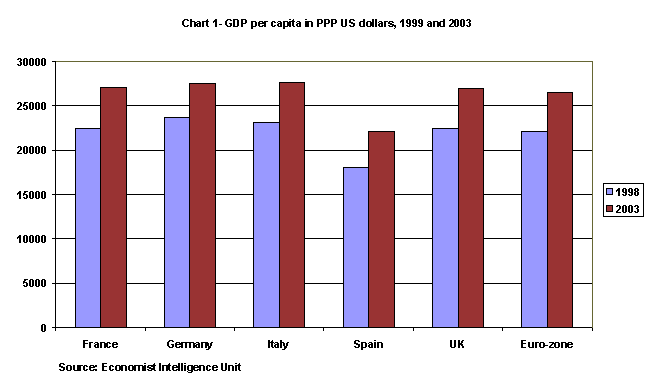
In order to compare GDPpc levels between countries it is necessary to take account of the fact that national price levels differ. If UK GDPpc was higher than French GDPpc simply because the UK cost of living was higher, the result would obviously not reflect a true difference in Welfare. Adjusted figures are conveniently provided by the Economist Intelligence Unit. The results based on these units for 1999, the year the euro was founded, plus forecasts for 2003 are shown in Chart 1 and Table 1.
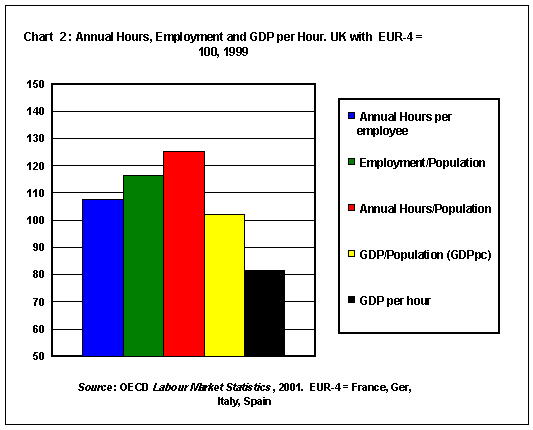
Chart 2 tells the story. It has to be based, unfortunately, on data that is now four years out of date and relates only to the UK and the four largest of the countries that joined the euro on Jan 1 of that year. Nevertheless it is a singular picture that is unlikely to have changed substantially in the succeeding years. The average British employee produces nearly one-fifth less in an hour of work than the average in those four countries. Fortunately, a higher proportion of our total population is employed, so that we only have to work under 10% longer annual hours to produce the result, already recorded in the previous section, that our GDPpc was 2% higher than the euro average. But our longer annual working hours mean fewer annual hours of leisure, a fact that is obviously sufficient to offset the positive effect of higher GDPpc on our National Economic Welfare. The question of why British hourly productivity is low has been the subject of much discussion. The general view is that is caused by a quarter of a century of underinvestment. Representatives of the CBI (Confederation of British Industry) have told the author privately however that they believe another cause is found in the fact that because we give employment to higher proportion of the population we inevitably employ a higher proportion of less productive workers: in other words the problem lies on both sides of the factory floor. Whatever the reason, the result is the same.
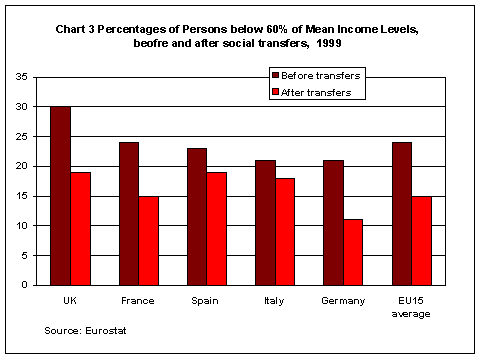
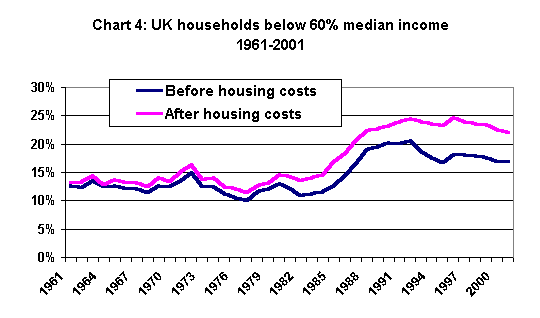
As shown in Chart 3 the most recent internationally comparable data come from the EU Statistical Office and relate to 1999. There are no calculations available for the euro-zone as a whole. In 1999 the UK poverty rate (after transfers) was higher than in France, Germany or Italy, and the same as in Spain. Unfortunately, owing to the data lag, the results of the UK government's anti-poverty programme do not fully show. Chart 4 shows UK national data, which are not strictly comparable with the EU data, but can be used to illustrate trends. The last full UK results relate to the financial year 2001/2002, i.e. are centred around October 2001. It is my judgement that in the year 2003 the UK will still have a higher overall poverty rate than the euro-zone. One problem is that as fast as the government introduces measures to raise the absolute living standards of the worst-off households (especially, for example, among lone-parent households), the absolute level of the median average also rises.
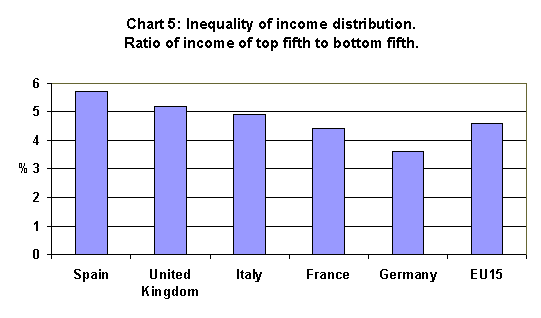
Chart 5 uses Eurostat data, again from 1999, to show that inequality was also higher in the UK than in France, Germany, Italy or the EU average, though it was higher still Spain. More recently the Office for National Statistics has published UK-only data for the Gini co-efficient for disposable income (a well known measure of general inequality which reads zero when all incomes are equal and 100 when one person has everything and the rest have nothing). In the years before 1980 this statistic fluctuated around 27%, at which level, according to the World Bank income inequality database, it was among the lowest in the world. In 1984, however, the UK post-tax Gini 'took off', reaching a peak in 1990 of no less than 36%, at which level, according to the ONS, it remains today. That implies that unless in recent years there has been a sharp increase in inequality among the euro-zone countries, it is likely that in the year 2003 the UK Gini remains significantly higher than theirs.
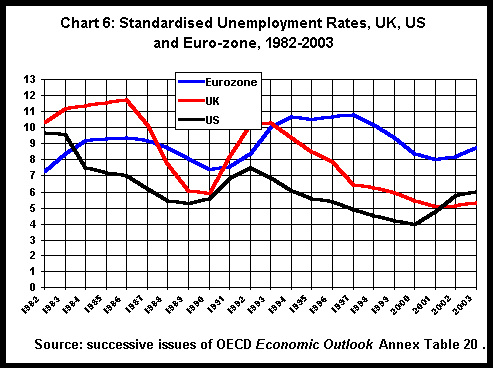
There are some reasons for believing that these data are not, in fact fully standardised. They are based on household surveys conducted by local officials who may apply national customs concerning the interpretation of replies (for example, whether passively leaving one's name on a list at a government employment office is sufficient evidence of actively seeking work). In addition they do not take account of widespread clandestine employment, avoiding the minimum wage and other restrictions, prevalent in parts of Spain and Italy. As a result officially published standardised unemployment rates in regions such as Andalusia appear implausibly high. The European Commission has recently issued a directive aimed at addressing the statistical problem, but it has not yet been implemented. Consequently one could suggest that if euro-zone figures were currently collected according to British practices, the total could come out as much as a point lower. Historically, the UK had higher unemployment than the euro-zone almost throughout the 1980s, about the same figures until the mid-nineties, and then much lower figures to the present day. When UK unemployment started moving rapidly downward at the end of 1993, euro-zone unemployment held up for another four years. Since then euro-zone unemployment has been slowly declining so that, allowing for measurement biases, it is not impossible that the gap between the UK and the euro-zone could close in the not too distant future. Euro-zone unemployment is frequently attributed to inflexibilities in the labour market caused by high employment taxes, high minimum-wage levels and to legal restrictions on dismissing workers. The OECD has also recently published a study (Working Paper No. 312, Dec 2001) suggesting that government interventions restricting competition in goods markets are correlated with high employment rates in the private business sector. In addition, some euro-zone social-security regimes, for example in France are sufficiently 'generous' to create virtual certainty of the existence of significant amounts of 'voluntary' unemployment. This thesis has recently been given very strong support in a brilliant paper by Steve Nickell, Professor of Economics at the London School of Economics and member of the Bank of England’s monetary policy committee, from which two telling quotations follow: There is not a European unemployment problem. Most European economies have low levels of unemployment. The problem lies in the large countries of Continental Western Europe, namely France, Germany, Italy and Spain. He then goes on to demonstrate a statistical analysis supporting the hypothesis that half of all the increase in reported unemployment in these four countries can be explained by developments in the 'generosity' of their unemployment benefit systems and by hiring and firing restrictions. These tendencies in turn are partly explained by cultural attitudes. He also gives some strong examples, which deserve quoting. Among prime age men, in most countries more are inactive [i.e. not seeking work] than are unemployed. The inactivity rate in this group is higher in the US than in the EU. Most inactive men are classified as sick or disabled, the majority of whom are claiming some form of state benefit. The size of this group has risen since the 1970s in nearly every country.
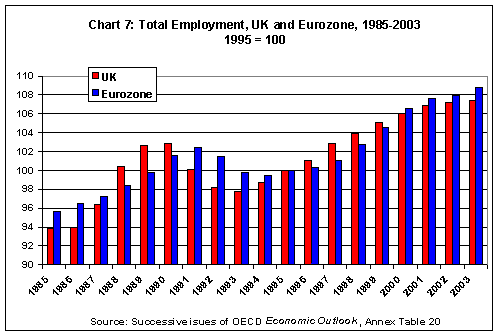
The upshot is that except in the case of Germany, to be further discussed below, it seems that virtually all of the difference between total reported unemployment in the UK and the euro-zone is 'voluntary'. Nickell, however, points out that the Franco-Germanic-Italian-Spanish 'syndrome' is not without adverse real consequences. It sometimes results in total unfilled job vacancies exceeding total actual unemployment. Despite unemployment, the total demand for labour exceeds the actual supply so wages and prices are pushed up. In response, the interest rate is raised and real economic growth slowed down. In addition Chart 7 shows that over the years, total employment, in contrast to unemployment, has had much the same upward trend in both the UK and the euro-zone. Consequently, it is unlikely that if the UK joined the euro at a fair exchange rate, (discussed below) and euro-zone reported unemployment was, in fact, slow to come down, there would be an adverse direct effect on UK unemployment. The General Result on Welfare Levels UK GDPpc is 2% higher than the euro-zone average. Of the four adjustments, one (unemployment) is strongly in our favour, while three go against the UK (poverty, inequality and working hours). So is clear that current Economic Welfare in the UK is actually a bit lower than that of the euro-zone. Inevitably, EU enlargement to bring in countries such as the Czech Republic, Hungary and Poland, will change that picture to some extent. But there is strong evidence that each of those countries is making rapid progress in catching up on the lost economic decades under communism. 3. National Economic Welfare and the euro How would UK membership of the euro change things? Firstly, joining the euro would involve closer general economic integration with a zone that, I have established, has higher welfare the UK. But joining the euro also involves:
How will each of these affect us? I will cover this last issue in the next section. Exchange rate stability Joining the euro would mean complete nominal exchange-rate certainty with the 12 euro-zone countries, a group that accounts for half of British trade. This would mean Britain could enjoy the full benefits of a single market with these countries. In plain terms this means a significant boost to trade and investment, which would raise Britain’s rate of economic growth and therefore National Economic Welfare.
If two countries have separate currencies, fluctuating against one another, they will trade less with each other than if they share a single currency. This is because it is less likely to make sense to trade across borders if your profitability will fluctuate with the exchange rate. An exporter’s profit margin, say roughly 5% of the transaction, could be wiped out almost literally overnight by movements on the currencies. This makes some small companies think – "why should I bother exporting or importing in the first place?" It may make larger companies limit the amount they choose to import and export. Joining the euro would get rid of these dilemmas and boost trade. This is not just a theoretical argument. A recent report by a commission of 11 leading international economists, chaired by Professor David Begg, examined all the research on this issue and concluded that participation in the euro had boosted trade between its members by 20-30%. When presenting his findings, Professor Begg conceded that this may well turn out to have been an underestimate as it refers just to the period 1999-2002. The euro has been coming since the Maastricht Treaty of 1991, and trade that increased in anticipation of the common currency would not have been picked up by the studies. Moreover, it’s unlikely that we’re at the end of the story and there may be a further boost in trade to come, particularly as we have only had one year of the price transparency brought about by notes and coins. A recent study by three economists at Imperial College, London concludes that joining the euro would eventually boost UK trade by 71%. Why should we care about all this extra trade? Well, one of the few assertions on which virtually all economists now agree is that increased trade boosts economic welfare. It allows companies to benefit from increasing returns to scale, by encouraging specialisation and therefore productive efficiency when countries have different economic advantages. In a famous paper (Does trade cause growth?, AER, June 1999) Frankel and Romer estimated that a 1 percentage point rise in trade as a share of GDP is associated with an increase of between 0.5 and 1% in income per head. Lets say the euro eventually causes trade as a share of GDP to rise by 8 percentage points. That could therefore raise income per head by 5% - the equivalent to 0.25% extra a year on growth for 20 years.
Britain’s leading economic think-tank, the National Institute of Economic and Social Research recently published the results of their year-long research program into the effect of Britain joining the euro. They found that joining the euro would bring far greater stability to interest rates, inflation and exchange rates. In their view, the main effects of all these things would be to raise British investment. Lower exchange rate volatility inside the euro would encourage business investment, raising Britain’s capital stock by 9 –10%. Our lower capital stock is often blamed for Britain’s poor productivity performance. According to the National Institute joining the euro would increase labour productivity, output and employment.
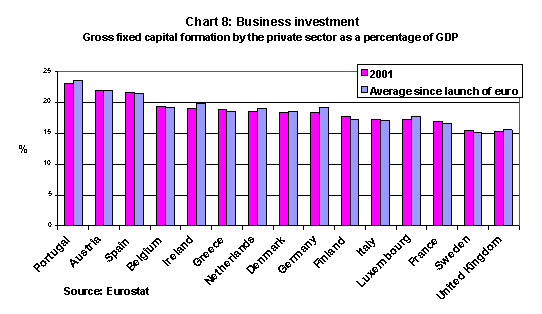
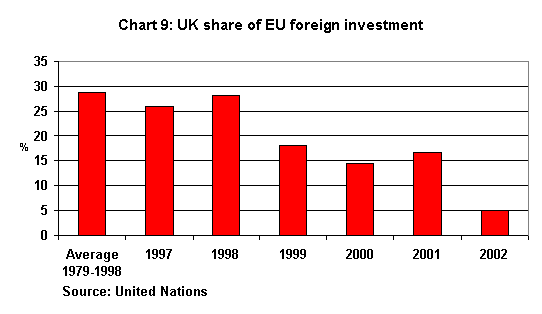
The boost to business investment is much needed because it is a lower share of GDP in Britain than any euro-zone country and has been every year since the launch of the euro, see Chart 8. There is clear evidence that Britain is already losing investment by staying outside. Foreign investors find it easier to shift their investment than domestic investors and have given a clear response to Britain’s decision to stay out. According to the United Nations (chart 9), in the twenty years before the launch of the euro, Britain attracted on average 29% of the investment in the EU. In the first three years since our share was down to 16%. The UN’s initial forecast is that our share collapsed to 5% last year – a truly shocking figure.
What does all this add up to? On the NIESR’s calculations, the extra business investment would deliver a 3% boost to British GDP, with an additional 1% increase coming from extra foreign investment and research and development spending, leading to an overall 4% boost to our GDP in the medium term. This would be worth more than £40 billion in today’s money and would be equivalent to a quarter percentage point of extra growth to the British economy each year for 16 years.
Adding this research together makes it possible to estimate the effect of euro membership on the growth of the economy as a whole. The NIESR estimate a 0.25% boost to growth from the increased macroeconomic stability increasing investment. I estimate a minimum 0.25% a year boost from the microeconomic benefits increasing trade. This brings a total euro boost of 0.5% a year. An increase in our trend growth rate from 2.5% to 3% for just 20 years would boost national income by £120 billion, or £2000 per head. The Stability and Growth Pact This is an agreement restricting budget deficits to various percentages of GDP. The purpose is to prevent national budgets from getting out of hand. The general view, strongly supported by the British Treasury, is that it is not only acceptable, but positively desirable, that if tax revenues fall in times of economic recession, some part of public expenditure should be financed by borrowing. But in the long run, through boom and recession, the current budget should balance. This 'Golden Rule' principle raises two questions. The first is how far is it acceptable to use borrowing to finance expenditure on public infrastructure? The second is how can one test whether the Golden Rule is actually being obeyed? At the present time a number of critics complain that the current wording of the Pact does not face up to either question. There is an active movement for reform. For example, Professor David Begg has suggested a powerful plan whereby committees of independent experts would continuously assess national budgets for consistency with the Golden Rule. But it is unlikely Britain will be able to negotiate the reforms that it wants as long as we remain outside the euro.
4. The Common Interest Rate – One Size is Better for All Will subjection to the ECB interest rate ('one size fits all') have a serious adverse effect on current or future UK welfare? Those who answer 'yes', argue:
I hold the view that all these arguments are wrong. I discuss them successively under the scenario that the UK joins the euro at a satisfactory exchange rate (discussed below) and acquires early representation on the ECB executive board. Finally, I investigate the question of whether, one size may not, in reality, be better for all.
The founders of EMU attempted to create a constitution to minimise political interference in monetary policy. In that respect their intentions appear similar to those of the British government when, in 1997, it gave partial independence to the Bank of England. The governing council of the ECB, all members of which participate in the interest-rate decision, comprises the 12 national central-bank governors and the six executive members. It is therefore double the size of the MPC and will grow further with EU enlargement. The statutes of the ECB envisage majority voting, but thus far it has operated by consensus. The board has international spread (currently every member has a different nationality) and also, by comparison with the MPC, less academic representation, but is not necessarily the worse for either feature. The total result is that, contrary to received wisdom in London, with respect to monetary policy the euro-zone has in effect a more broad-based, and potentially more politically responsible, governance than does, in the form of the powers and responsibilities delegated to the Bank of England and the MPC, the UK. An element of international political conflict did enter the selection of the first president and the current holder was seen by many to have been a weak choice. The proof of the pudding here lies in the history. All that concretely emerges is that Mr. Duisenberg's public statements in English of have sometimes been infelicitous. In the meantime, it remains to be seen whether France's highly qualified candidate for the succession survives the awkward handicap of being currently on trial for corruption.
The ECB's interpretation of the Maastricht Treaty was described in detail in an article in the Bank's first monthly bulletin in January 1999. It aims for inflation of less than 2% based on a harmonised index which probably has downward bias compared to the form of index used by the MPC. The article is evasive about the 'symmetry' question. The MPC was also initially uncertain on that point and actually developed its own doctrine in response to later criticism. More generally the ECB affirms that its primary responsibility is 'price stability' and that the means to that end are to be found in an explicit version of the quantity theory of money advocated by Milton Friedman which had considerable world-wide support in the 1980s and is now generally discredited. The rules set out in the January 1999 document in fact logically imply that rather than by interest-rate management, policy should mainly be implemented through control of the money supply, a view which is particularly unpopular in Threadneedle Street. Throughout the document, however, there are qualifications seeming to say, 'when these principles tell us to do something damaging to members' Economic Welfare, we will disobey'. It is even conceded that in the event of severe 'misalignment' of the euro external exchange rate, intervention would be justified (and, in fact, occurred). Also noticeable is a significant passage citing academic evidence that low inflation is good for economic growth, thus in effect conceding that price stability is seen as means to a more fundamental end. Overall, the document essentially represents German academic and political predilections and was obviously influenced by the date of Maastricht, ie 1992, at the end of a period of strong inflation. If the ECB document of 1999 had been influenced by the general outlook of the Bank of England in 1992, would it have looked so different? Recently announced plans would bring the ECB closer to the system of the Bank of England. As well as aiming for inflation of less than 2%, the ECB will now aim for inflation of "close to 2% over the medium term" as well. The ECB also said it would give less to prominence to its analysis of the money supply in presenting its interest rate decision.
So long as wise men and women in an increasingly deflationary world continue to see inflation targets as the prime means of macroeconomic management, the ECB will function little better and little worse than the MPC. In the longer run both the European and British will in any case want to follow the Americans and adopt more broad-based practices of macroeconomic management. This, to me, is a clear implication of the recent powerful lecture by Professor David Begg in which he evaluates ECB policy as if it were guided by the same principles as those that appear to guide the US Federal Reserve Board.
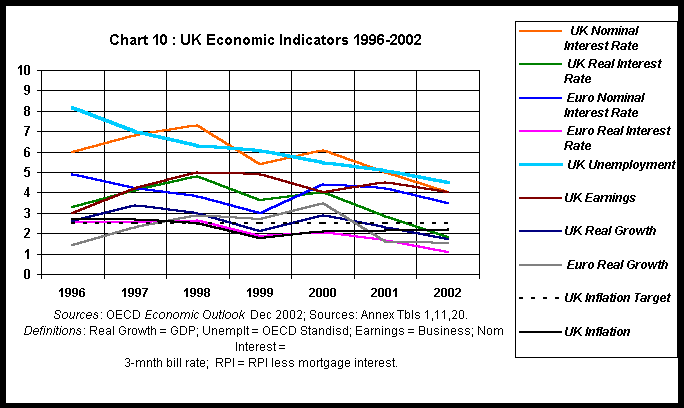
Chart 10, tracks UK inflation excluding mortgage interest, real growth, unemployment, interest rates and earnings since 1996.
The case for the MPC From 1997 to 2001 the UK real economy grew at a satisfactory rate and held up well during the global slowdown at the end of the period; unemployment continued to decline and inflation was always at or below the target of 2.5%. Average nominal interest rates were around 6%, implying real rates around 4%. The nominal rate rise of 1997-8 was justified by signs - such as fast real growth, falling unemployment and accelerating earnings - that the economy was 'overheating'. In 2000-2001, although there were no signs of domestic overheating, a rate rise was indicated by movements of the world oil price (see below Chart 5b and discussion of ECB performance.) The case against the MPC Neither rate rise was justified and the high 4% real rate has been bad for long-term growth. In 1997-8 the RPIX was on target and in 1999-2001 below target. In 1997-8 the MPC members, despite outside critical comment, allowed themselves to be misled in four different ways, namely fear of potential inflationary effects from a fall in the sterling exchange rate, misinterpretation of the earnings statistics, under-estimation of productivity growth and a misguided belief that a 3% GDP growth rate was a sign of macroeconomic ill health. Each rate rise clicked down the real growth rate and, as the chart shows, over the whole period the average real growth rate has been gradually brought down by between a half and a whole point. Christopher Martin and Costas Millas, of the Economics Department at Brunel University have demonstrated in a careful econometric study a clear deflationary bias in MPC policy reactions: i.e. interest rates were more sensitive to fears of too much inflation than 'too little'. Although the target concept may have been thought to be symmetrical, its execution was not.
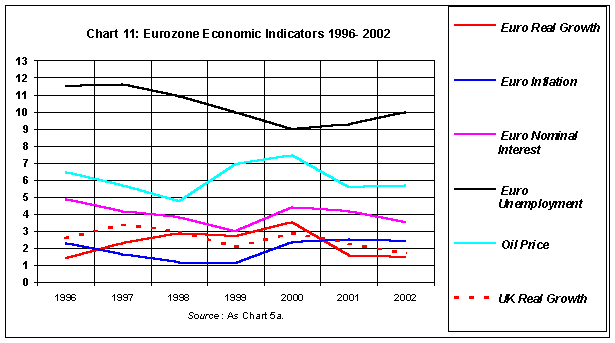
More recently, in 2002 and early 2003, there is a growing opinion that UK rates are two high, maybe by as much as whole point, for the long-term good of the economy. MPC minutes show that this thought appears to be growing among MPC members’ themselves especially among the independent members. The debate is very much affected by opinions concerning the state of the property market, a problem which will be specifically further discussed below. The case for the ECB See Chart 11, which is similar to Chart 10 except that earnings are omitted and a track of oil prices included. (The formula used makes a one third fall in the price produce a one-point fall in the index.) Over the three years 1999-2001 the euro-zone economy grew at 2.6% pa compared with 2.4% in the UK, 3.1% in the US and 2.2% in the euro-zone in 1996-8. Thus in terms of growth the ECB has performed better than the MPC, better than the economy of the pre-euro euro-zone and comparably with the US late-'90s 'tiger'. Unemployment fell from 10% in 1999 to 8.5% in 2003. Inflation was half a point below target in 1999, on target in 2000, half a point above it in 2001 and a quarter of a point above in 2002. In 2001 and 2002, if the lagged effect of oil prices were removed, the euro-zone would probably have appeared on target in that year also. As Table 2 shows, the ECB has also on maintained real interest rates at a lower average level than in either the US or the UK.
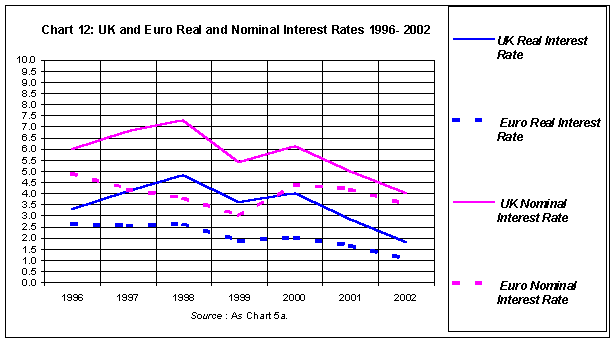
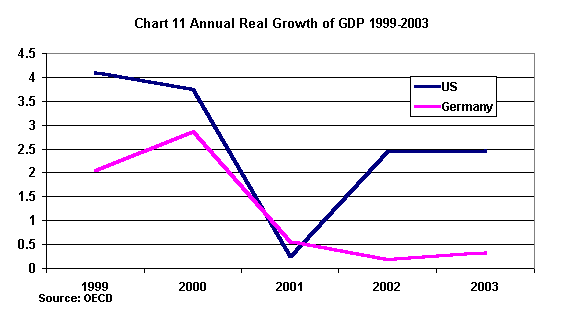
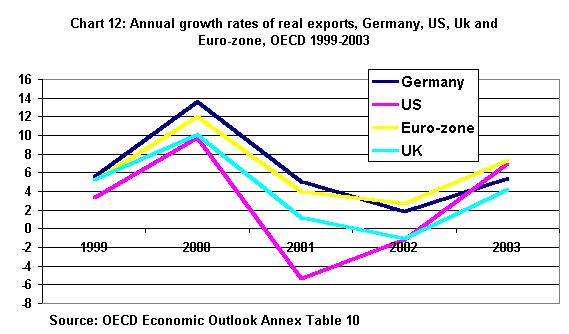
The case against the ECB The main case for criticising the ECB lies in the interest-rate increases of the year 2000 (see Chart 12) which could be held responsible for some of the euro-zone growth slowdown of 2001 and most especially with the historically unique collapse of German economic growth that occurred in the last quarter of 2000. The explanation for what happened is not in my opinion, difficult. If one attempts to completely forestall an oil-price increase from affecting the domestic price level one will inevitably also deflate the real economy. The correct procedure is to let domestic prices rise by some extent. Steve Nickell's alternative explanation of the events, must however, be recognised. As already mentioned he suggests that rather than the oil price, the main cause of the upward retail price pressure which led to the interest-rate hike was the state of affairs in the labour market. According to the chart, euro-zone inflation did, in fact, rise by half a point in 2001 but since real growth fell by no less than two points one can say with certain hindsight that the euro-zone nominal interest rate was too high by at least a point, if not more. The Problem of Germany The serious German economic slow-down which began in the middle of 2000 has been widely cited as evidence of negative economic forces within the euro-zone. OECD committees have concluded that the causes must have been largely internal and in fact it seems to me they are not far to seek: German households cut consumption and increased saving, thus causing a sharp decline in domestic demand. Where else in that year did the same thing happen? The answer was in the US, where the explanation, namely the bursting of the hi-tech share market bubble, is well known. It then turns out - see Chart 11 - that after the bubble broke the German and US economies followed each other like puppets on strings. The obvious question, however, is that if Wall Street was the trigger for the German slow-down, why was not the UK similarly affected? GDP growth, after a degree of recovery during the first part of 2001, was again apparently badly hit by US events, this time those of September 11 2001, and again the effect seemed somewhat stronger in Germany than in the UK.
One explanation which is difficult to test is that during the boom German institutional and personal investors actually became more heavily involved in dollar equities than was the case in either Britain or France. Up to mid 2002, the argument goes, these German investors had accepted their losses, hoping Wall Street would recover, but by the same token, it is argued, they have become extremely cautious about domestic expenditure. Can any of the recent German history be attributed by entering the euro at an overvalued rate in 1999? For the following reasons, the answer seems negative
Conclusion to the debate on ECB and MPC On the historical evidence that it is difficult to say that the performance of either body has been superior to the other.
Between 1996 and 2002 nominal short-term interest rates averaged 4% in the euro-zone and 5.8% in the UK. In May 2003 the corresponding figures were 2.5% and 3.75%. In other words, it seems, at the time of writing the interest rates have converged. Given that the present situation is not typical of the previous history, is it a freak? Is there some underlying reason why a normal healthy British economy needs real short rates nearly two points higher than a normal healthy European economy? The usual explanation given is that high rates have been necessary to dampen booms in house prices which will otherwise spill over into the rest of the economy. Why is the British housing market special? The sharp boom in property prices of the past few years has almost caused macroeconomic policy panic. If however, the data are studied more carefully it will be found that even as recently as the first half of 2002 the absolute level of real property prices was not above the long-term trend. The 'boom' in fact reflected sharp recovery from a period below trend. In other words the distinctive feature of the UK property market, as compared to Europe, appears to be volatility. The main explanation for that seems to be that as compared with the situation in the euro-zone, a higher proportion of UK domestic mortgage contracts are based on interest rates that vary with the base rate. But that does not explain why a healthy UK housing market needs a chronically higher absolute real base rate. Professor David Begg has also suggested that the problem is especially English and is exacerbated by slow traditional practices in the process of transferring property after sales have been provisionally agreed. It is not to be denied that by the end of 2002 the English market had 'overshot upwards by maybe as much as 20%. By March 2003, however, although evidence is conflicting, it is certainly the case in southern England that there is more property for sale than there are buyers at the asking prices. Many estate agents report that actual transactions prices have also started to fall. Another version of the 'UK Unique' story is that there are structural factors causing the UK business cycle to be systematically and permanently out of phase with the Continental cycle. Because business cycles are fundamentally unforecastable (which is not the same thing as unexplainable) the proposition is inherently non-disprovable. It might be possible to produce statistical results based on a particular historical time period, in support of the proposition; but then, with a small change in the methodology, the opposite conclusion could be reached. The cyclical story is often represented in the so-called 'output gap', i.e. the difference between the actual level of GDP and a statistical calculation of its long-term trend. Table 4 shows these gaps, for UK and euro-zone, expressed as percentages of current GDP, as calculated by the OECD back to 1984, estimated for the years 2001 to 2003. The UK and the euro-zone are in fact correlated (r = 0.61) but owing to the small number of observations there is a wide range of error. The regression line (indicating the most likely level of UK gap for given levels of euro-zone gap) has a slope very close to 1.0, and also passes close to the origin, indicating that if the euro-zone gap is say 1.5% the most likely gap for the UK is also 1.5%. In short, for what it is worth, the very simplest type of statistical analysis of the history of the output gaps tends to support (more precisely not to deny) the proposition that the UK and euro-zone economies, with and without the euro, are strongly cyclically integrated. The same conclusion (that the UK and the euro-zone are cyclically convergent) is reached at a much deeper level of statistical methodology in a report by Ardy, Begg and Hodson. In addition, in an paper published in 2001 by Volterra Consulting, using an alternative rather sophisticated statistical method, reaches the important conclusion that convergence tends to increase through time after countries become more integrated. For the years 2001 to 2003 the OECD estimates that the UK had a moderately smaller output gap than the euro-zone but there does not seem to be any result from the general history of output gaps which would argue against UK euro entry. The same applies to general studies of convergence.
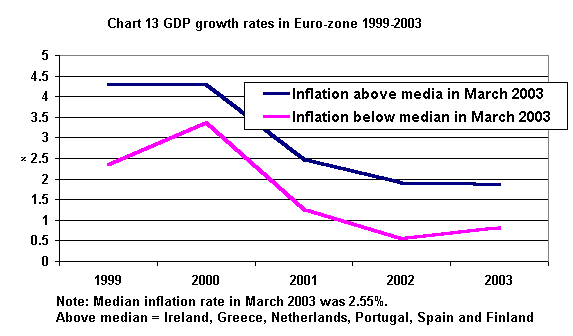
One size is better for all 'Business for Scotland' argues that interest rates set by the European Central Bank are far more attuned to the needs of the Scottish economy than those set by the Bank of England. (Observer, p 4 13 May 2002) According to the OECD, Ireland will have the highest inflation rate in Europe in 2003 (4% by GDP deflator, higher by consumer prices). Some people have argued that Ireland is therefore suffering from 'too low' interest rates set in Frankfurt. What is omitted is the fact that the OECD also shows Ireland having the highest growth rate in Europe. If Irish interest rates were set in Dublin, they would no doubt be higher, and Irish growth (and Welfare) correspondingly lower! Thus Frankfurt, it could be argued, is good for Tigers. This line of thinking can be pursued by dividing the euro-12 countries into two groups: those whose inflation-rates (measured by the harmonized index of consumer prices) in March 2003 were forecast to be below the median, and the rest, on the other. The median rate was very close to 2.5%. The above-median inflation countries were Ireland, Greece, Netherlands, Portugal, Spain and Finland. The median inflation rate among them in March 2003 is 3.8%. The below-median inflation countries were Belgium, Italy, France, Germany, Luxembourg and Austria. The median inflation rate among them is 2.1%.
Chart 13 shows the population-weighted average (not median) GDP growth of the two groups of countries from 1999 to 2003. It will be seen that in economic growth the above-median inflation group outperforms the below-median in every year of the period. Over the five years as a whole the average difference in annual growth rates was 1.3% - not a huge amount, but a significant amount. When a previously poor country, such as Ireland, 'takes off' into fast growth, the market exchange rate, on account of the 'traded-goods-effect' discussed below, will tend to be low. At first the low rate will be an advantage, but as the growth process unfolds, it will become inflationary. The resulting rise in domestic prices relative to foreign prices will therefore be benign. Consequently one could suggest that had each of the above-median inflation countries been left to the devices of their own central banks, they would have experienced tighter money, higher rates and slower growth By contrast, since ECB real interest rates, at around 2%, could hardly have been lower (and if they had been, it is unlikely there would have been much effect), in the below-median inflation countries, without the euro, the growth performance would surely have been much the same. Conclusion on the common interest rate I believe I have demolished all the specific arguments against one-size-fits all. I therefore conclude that European Monetary Union is not a threat to UK Economic Welfare. In fact, if as a result of British entry, a reformed system, superior to both the present British and EMU arrangements, were to emerge, UK Welfare would certainly benefit. It is essential to recognise that the move to EMU profoundly alters the nature of the system within which policy is formulated and implemented. When the UK enters the euro, we shall be able to sustain permanently lower real interest rates without the threat of inflation or currency instability. This will in turn permanently increase the rate of growth of British Economic Welfare.
5. The Pound and Euro have converged Until recently the pound was over-valued against the euro and the euro was undervalued against the dollar, the second problem being a contributory factor in the first. Against the US dollar, the pound was not greatly over- or undervalued. It was widely thought that the overvaluation of the pound against the euro was unbalancing the domestic economy. Consequently, it was widely assumed that even if the UK did not enter the euro, the euros-to-the pound rate would fall eventually. The exchange-rate problem in relation to UK-euro entry was therefore essentially a problem of timing. If we entered the euro at the market rate that happened to exist before the pound had sufficiently floated down, we should be frozen into a situation where Continental producers had a competitive advantage over UK producers that would persist until the end of a probably-painful process of relative deflation: UK inflation would have to be kept below Continental inflation and the government would have difficulty maintaining full-employment. Valuing Currencies How do we know the pound was or is over-valued or under-valued against the euro or that the euro is over-valued under-valued against the dollar? There are basically two definitions of the 'right' value of a currency.
Less tradable goods are typically services and therefore typically labour-intensive. Tradability is a matter of transport costs, e.g. the cost of flying a London hairdresser to New York and back for the day. Transport costs and labour productivity are correlated, hence if one country has substantially higher real wages than another, that country's TGPPP will tend to be higher than its whole-GDP PPP. This difference is called the Traded-Goods Effect. If countries' actual market exchange rates do tend to approximate TGPPPs, then, in international data, actual exchange rates should be positively correlated with real GDPpc, and this is in fact observed to be the case. The slope (regression coefficient) of the statistical relationship between GDP PPPs and market exchange rates is, however, not high. Consequently for countries with only small differences in GDPpc, the TGPPP and the GDP PPP are usually reasonably close. Traded-Goods bias also works within countries as well as between countries. The real hourly wage of a barman in Scotland is likely to be significantly lower than the corresponding remuneration of a person doing the same work under the same conditions in Hampshire. The reason for the internal phenomenon is the same as for the external one: per capita GDP in southern England is higher than in Scotland. This point makes for a qualification in estimating the TGPPP between UK and euro-zone. The latter still contains important partially underdeveloped sub-regions (such as the Estramadura of Portugal, the rural areas of Andalusia and Galicia in Spain, the Mezzogiorno - ie southern - region of Italy and all rural areas of Greece) where real wages remain less than half the EU average and whose combined populations represent 10% of the population of the whole EU. At a rough guess the UK/Euro TGPPP therefore could be, say, 3% higher than the GDP PPP.
Economists specialising in the theory of international trade argue as to whether, in the absence of capital flows, the equilibrium rate should converge to the TGPPP. In my opinion, when looking at a prospective merger of two currencies, the latter criterion is much the stronger. Before the merger we expect the price of a particular widget produced in Lyons to be much the same as when produced in Lille, and the price of the same widget produced in Birmingham to be much the same as when produced in London. After the merger we desire that all four prices should converge. Data Sources for PPPs The OECD regularly publishes carefully-collected data on Purchasing Power Parities relating to the whole GDP, i.e. including the relative prices of both tradable goods and less tradable goods. These rates are called GDP PPPs. The latest publication was in Main Economic Indicators, May 2002 (see table on page 273), and gives figures for PPP exchange rates, comparative price levels (ratio between the PPP rate and the market rate - a measure of international competitiveness) and per capita volume for GDP (nominal GDPs in local currencies converted into international currency at the PPP, rather than market, exchange rates - i.e. international measures of real GDPpc).
The OECD-published GDP-PPP between the pound and the euro in 2001 can be obtained from Main Economic Indicators (May 2002, p 273) by dividing euro-zone column 4 by the corresponding UK column. This yields Є1.376 to the Ј. Raising this by 3% to allow for the above-suggested small amount of Traded-Goods Effect gives us Є1.408. So let us put a ball-park estimate of the TGPPP between pound and Euro at a round figure of Є1.40.
In January 2002 the OECD included an Annex in its Economic Survey of the UK 2001 entitled 'The Pound's Fair Value'. They surveyed and summarised the best part of twenty studies on the subject, mostly based published between the beginning of 1998 and mid 2001. The results ranged from Є1.20 to Є1.50, with a median around Є1.35. In late 2001, the researchers for the Ernst and Young ITEM forecasting club (Report; UK Economic Prospects Winter 2002, published Jan 20) interrogated the British Treasury economic model for an equilibrium Є/Ј rate. The result, precisely, was Є1.40. In May 2003, Є/Ј rate stood at 1.40. At that point it had fallen from a typical level of 1.62 at the end of 2001. So the pound is now at exactly the ideal rate for entry. 6. Conclusions for UK Welfare After considering
I believe I have established that UK Economic Welfare is no higher and is possibly lower than the average level among the twelve current members of the European Monetary System (euro-zone). Since entering the euro implies greater economic integration with the euro-zone, UK Welfare can only benefit.
end of document. |
|||||||||||||||||||||||||||||||||||||||||||||||||||||||||||||||||||||||||||||||||||||||||||||||||||||||||||||||
|
|
||||||||||||||||||||||||||||||||||||||||||||||||||||||||||||||||||||||||||||||||||||||||||||||||||||||||||||||||
|
All rights reserved, Copyright by
Robin Marris 2002 .
Designed by servicomex@yahoo.com |
||||||||||||||||||||||||||||||||||||||||||||||||||||||||||||||||||||||||||||||||||||||||||||||||||||||||||||||||
 |
|
|
|
|||||||||||||||||||||||||||||||||||||||||||||||||||||||||||||||||||||||||||||||||||||||||||||||||||||||||||||